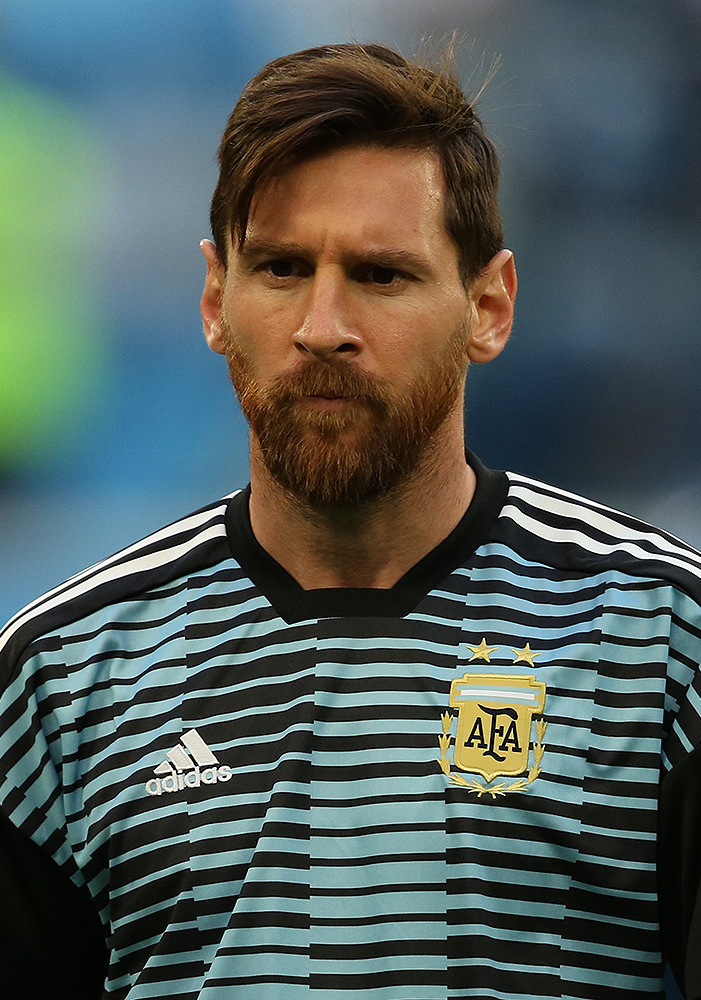
When Pep Guardiola wrote Lionel Messi’s name on the team-sheet for the Clásico of May 2nd, 2009, he placed it in the position normally reserved for the centre-forward. Then, before the players left the dressing room, he drew them around a tactical board and explained that on this evening, they would not have a centre-forward at all.
What followed at the Bernabéu was a 6-2 demolition of Real Madrid in which Messi scored twice from a position so unfamiliar to football that nobody quite agreed on what to call it. He was nominally the number nine, but he never played as a number nine. He dropped into the space between Madrid’s centre-backs and their midfielders, received the ball there, turned, and — because no defender knew whether to follow him out or hold the line — he had as much time as he wanted to choose what to do next.
The move had a name in football’s older grammar — Hidegkuti at Hungary in 1953, Cruyff under Rinus Michels, Francesco Totti under Spalletti at Roma. But Guardiola made it modern. He made it deliberate. And he made it, for the next four years, the most devastating tactical idea in the sport.
This is the explainer that footballing language often skips. What is a false nine, exactly? Why does it work? Why do its modern interpretations look so different from each other? The role is everywhere now — Roberto Firmino’s six-year tenure at Liverpool, Phil Foden’s evolution at Manchester City, Jude Bellingham at Real Madrid, Nicolás González for Argentina in pre-World-Cup friendlies. Each version is different, but they share a common logic. This is that logic, in detail.
What a False Nine Actually Is
A false nine is a centre-forward who deliberately vacates the centre-forward zone. Strictly speaking, every dropping movement by a striker creates a brief false-nine moment. What distinguishes the genuine role from a routine drop is intention: in the false-nine system, the striker’s primary instruction is to leave the central forward zone empty for extended phases of possession, drawing the opposition’s centre-backs into a decision they cannot win.
If the centre-backs follow the false nine into midfield, they leave space behind for the wingers to attack. If they hold their line, the false nine has time on the ball thirty yards from goal, with the entire opposition midfield ahead of him — a luxury no genuine number ten gets, because a ten plays inside an organised midfield block. The false nine plays between the lines, in the zone neither the defenders nor the midfielders are responsible for.
The position is geometrical before it is technical. Skill matters; positioning matters more. The best false nines have all been brilliant individual footballers, but the role’s effectiveness comes from the structural confusion it creates rather than the individual moments it produces.
Crucially, the role is a collective mechanism. A false nine playing without runners accelerating into the space he vacates becomes simply a deep midfielder with no place in the attacking line. The wingers, the midfielders, the holding anchor behind — every component of the system depends on every other. Understanding the false nine means understanding it as a team shape, not an individual instruction.
The 1953 Revolution: How Hungary Changed Football at Wembley
The Wembley Wizards. The “Match of the Century.” Call it what you like — the 6-3 victory of Hungary over England on November 25th, 1953, remains the most tactically significant result in the first century of international football. And at its heart was a false nine performing, in front of 100,000 confused spectators, what modern coaching theory would recognise immediately and what England’s defensive system had no framework to resist.
Nándor Hidegkuti was Hungary’s centre-forward. His shirt number was nine. But from the first minute at Wembley, he played nothing like a centre-forward. He dropped deep — sometimes thirty yards from goal — into the space between England’s defensive line and their midfield. His job was not to finish. His job was to receive.
England’s stopper centre-back, Harry Johnston, faced a choice that had no good answer. If Johnston followed Hidegkuti into midfield, the central channel opened up behind him. Hungary’s genuine forwards — Ferenc Puskás, Sándor Kocsis, Zoltán Czibor — were positioned and waiting to run into that channel. If Johnston held his position and allowed Hidegkuti to receive unmarked in deep areas, Hidegkuti had all the time in the world to pick passes, drive at the defensive line, and orchestrate the attack from a position no defender was responsible for.
Johnston mostly held. Hidegkuti scored three goals and made two more. The final score was 6-3, but the performance was even more comprehensive than the scoreline suggested.
What Hungary’s coach Gusztáv Sebes had understood — and what he had spent years systematically building into his “Golden Team” — was that the geometry of football’s defensive organisation was built around a simple assumption: the number nine plays near the goal. Remove that assumption, and the structure collapses. The defensive midfielder is too deep to pick up the dropping forward. The centre-back is too committed to holding the line to follow him out. The number nine has found, in the gap between the two defensive lines, a zone of perfect freedom.
Hungary played the same system six months later in Budapest and won 7-1. The following year, they were the greatest team on earth, unbeaten in four years. The false nine — though nobody called it that in 1953 — was the tactical innovation that made them what they were.
England, for their part, drew the wrong lessons. They adjusted their defensive tactics, deployed a different centre-back, and won the return fixture 4-3 on a bad pitch. The football world then spent the next half-century slowly rediscovering what Sebes and Hidegkuti had already demonstrated.
The Pre-Messi History: Cruyff and the Total Football Era
The role is older than is commonly remembered. Johan Cruyff at Ajax under Rinus Michels reinterpreted the Hungarian blueprint for the Total Football era. Cruyff was nominally the number nine in Ajax’s 4-3-3, but in any given moment he was a winger, a midfielder, a centre-forward, or a deep-lying playmaker depending on where the ball was. His positional fluidity was the philosophical core of Total Football: every player can play every position, and the false nine is just the most visible expression of that principle.
What Cruyff added to the Hidegkuti model was velocity. The Hungarian version was primarily about receiving and distributing. Cruyff’s version was about receiving, moving, accelerating, and creating chaos at pace. He would drift wide, appear centrally, drop deep, then arrive at the far post. The defensive dilemma his movement created was not just about the centre-back following or holding — it was about a defence being unable to track an intelligent attacker who refused to stay where the defensive structure expected him.
Cruyff’s Ajax won three European Cups in a row from 1971 to 1973. When he took the same principles to Barcelona as a player under Rinus Michels, and later as a manager in his own right, the philosophy passed into Catalan football’s DNA. The Barcelona playing style that Guardiola inherited, absorbed, and then applied to Messi in 2009 was, in a direct and traceable line, an inheritance from Cruyff.
Francesco Totti and the 4-6-0 Season
The bridge between the Cruyffian version and the modern one was built in Rome, in the season 2006-07, by a man generally remembered as Italy’s greatest romantic but rarely credited as a tactical pioneer.
Francesco Totti under Luciano Spalletti was the crucial experiment. When Spalletti arrived at Roma in 2005, the club had a problem: their best player was a number ten who could no longer play as a ten. Age and injury had cost Totti a yard of pace; his days of beating full-backs on the outside were behind him. Spalletti made a counter-intuitive decision. Rather than deploying Totti in a reduced role, he would build the entire system around his creativity from a deeper position.
The result was a 4-6-0 — four defenders, six attacking midfielders, zero recognisable strikers. Totti became the false nine at the head of a six-man attacking block, dropping between the lines to receive, with Simone Perrotta and Daniele De Rossi alternating support runs behind him, Mancini and Pizarro making the wide-to-inside movements the system required, and Aquilani providing the quality from deep.
The animation above shows what Spalletti’s Roma looked like in the attacking phase: Totti dropping to receive, five players branching outward from his position, the opposition defensive structure with no striker to track and no clean assignment for any of their defenders. The system was chaotic from the opposition’s point of view, and it was the most productive attacking unit in Serie A that season.
Roma scored 83 Serie A goals — the most in the division. They finished second in the title race on goal difference. The football was not just effective: it was joyful. Watching Totti in that system is watching a footballer given, at thirty years old, a role that perfectly suited the brain he had always had.
Three years later, Guardiola gave the same role to the greatest footballer alive. The comparison is instructive: what Spalletti and Totti demonstrated with a diminished player whose best physical qualities were behind him, Guardiola and Messi then demonstrated with a player whose best physical qualities were still arriving. The philosophical structure was identical. The results were historic.
Messi 2009–2012 — the Canonical Version
What Guardiola understood, and what previous false-nine experiments had only intuited, was that the role required an ecosystem. A false nine in isolation is a dropping striker. A false nine inside a positional-play system is a tactical revolution.
Messi’s effectiveness at the false nine came from three structural decisions Guardiola made around him. First, the wingers — Pedro on one side, Thierry Henry initially and then David Villa on the other — were instructed to attack the centre-backs’ shoulders rather than hugging the touchlines. When Messi dropped, the centre-backs had a binary choice: follow him or hold the line for the wingers running in behind. There was no good answer.
Second, the central midfielders — Xavi and Iniesta — were positioned to combine with Messi in the half-space rather than to offer him outlets behind. The geometry was: Messi drops, Xavi and Iniesta arrive in the half-spaces around him, the wingers run beyond. Three players occupied the zone the centre-backs were dragged toward.
The animation above shows the full 4-0-6 mechanism: Messi retreating from the striker zone into the space between the lines, Xavi and Iniesta expanding toward the half-spaces to support, and Pedro and Villa accelerating behind the defensive line that has been dragged forward trying to track Messi. Busquets sits unmoved at the base — the structural anchor that gives the whole system its defensive insurance. By the time the wingers run in behind, Barcelona have six players in the attack and the opposition has had to make a decision it could not have prepared for.
Third, and most importantly, Sergio Busquets at the base of midfield held an unmovable position behind Messi’s drop. Busquets’s job was to be the rest-defence so total that the team could commit four players forward of the ball without fearing a counter-attack. The false nine works only if the team’s defensive structure is unaffected by it. Busquets was the affordance that made the rest of the system possible.
The Guardiola Barcelona that won Champions Leagues in 2009 and 2011 was, more than anything else, a false-nine ecosystem. When Messi dropped, the team was nine men attacking a defensive line that had no centre-forward to mark.
The Defensive Dilemma: What the Centre-Back Actually Sees
To fully understand why the false nine is so effective, it helps to stand in the boots of the centre-back who has to deal with it. Most tactical analysis explains the role from the attacker’s perspective. The defender’s perspective is, if anything, more revealing.
A modern centre-back’s primary job is to mark the centre-forward. Everything about how a high-level defender is trained — his positioning, his reading of the game, his trigger for stepping out, his relationship with the other central defender — is calibrated around the assumption that there is a striker in the central channel ahead of him. That striker is his reference point. Where the striker goes, the centre-back follows (within certain limits). Where the striker doesn’t go, the centre-back holds. The striker is the clock against which all defensive decisions are measured.
The false nine removes this clock. The moment Messi began drifting into the space between the lines, Pepe (or Carles Puyol’s opposite number, whichever central defender faced Messi that season) faced a genuinely novel problem: the player he is supposed to mark has moved into a zone that is not technically his responsibility, and he has approximately one second to decide what to do about it.
The animation makes the dilemma visible. Option A: the CB follows. The moment he steps out of the defensive line, the wide channel opens for Villa or Pedro to run into behind. The remaining centre-back is now defending a two-on-one with no cover. Option B: the CB holds. Messi receives unmarked in the most dangerous creative zone on the pitch, with a full view of the penalty area and twenty yards of time to choose his next action. There is no third option. The system is designed to make both choices cost something.
What experienced defenders will tell you privately is that the most destabilising thing is not the dilemma itself — it is the not knowing which one he’ll pick. A centre-back who is forced to make a fast decision in a moment of defensive disorganisation will often make the wrong one not because he chose poorly but because the cognitive load of the decision delayed his physical response by a fraction of a second. That fraction is the goal.
The best defences against the false nine — Atletico Madrid under Diego Simeone, Mourinho’s Real Madrid — chose Option B consistently. Hold the line, concede the space between the lines, and trust the midfield to engage the false nine before he can turn or drive forward. But this requires exceptional midfield pressing discipline and a goalkeeper who can sweep behind when the defensive line is stretched. It is a solution, but it is a demanding one.
Modern Variations
The role has adapted dramatically. Few teams now use a “pure” false nine in the Guardiola-Messi sense. The variations are revealing.
Roberto Firmino at Liverpool, 2017–2023
Roberto Firmino was the first major post-Guardiola false nine — and the most misunderstood. His goal tallies were modest by the standards of elite centre-forwards. Commentators who judged him by those numbers were looking in the wrong direction.
Klopp used Firmino as a defensive false nine — his primary instruction was not to receive and create, as Messi’s had been, but to press the opposition ball-playing centre-backs and disrupt their build-up before it reached the midfield. Firmino’s dribbling and chance creation were secondary functions. He was the player who made Liverpool’s gegenpressing geometry possible from the front.
The mechanism worked like this. Firmino would drop from his nominal nine position toward the opposition’s centre-backs, not to receive a pass but to close down their passing options. His approach angle was calculated to kill the horizontal pass to the full-back — the first stage of the press. This forced the CB either to go long or to play centrally into Liverpool’s defensive midfield, where Fabinho was waiting. If the CB tried to play through, Firmino’s cover shadow had already closed the first option; Henderson or Wijnaldum closed the second.
The animation shows the Firmino mechanism: the approach angle that blocks the wide option, Henderson filling the central lane, Mané closing from the other side. Within three seconds of the press beginning, the opposition CB has no clean pass. When the ball is won — which it often was, by Liverpool in the period from 2017 to 2020 — Salah is already running into space behind a defensive line that has pushed forward and has not had time to reorganise.
Firmino’s career goal totals are modest by elite-striker standards. His value was almost entirely structural. Klopp has said repeatedly that Firmino was the most important player in Liverpool’s system. He was not wrong. Every Salah goal from a press-triggered counter in that era has Firmino’s pressing angle somewhere in its genesis.
Phil Foden at Manchester City, 2023–present
Phil Foden’s false nine is closer to the Cruyffian interpretation than the Klopp one. Where Firmino’s primary function was the press, Foden’s is the combination: receiving in the half-space between the lines, moving the ball quickly in tight spaces, and arriving in the penalty area as the third or fourth component of a short passing sequence.
Pep has used Foden as a false nine in roughly a third of City’s matches since the 2023 Champions League win. The positioning instruction is specific: Foden starts centrally, drops between the opposition’s defensive and midfield lines to receive, plays one or two touches maximum, and then makes his run into the box on the third pass of the combination. The timing of the run — off the ball, after his first involvement — is what makes it effective. Defenders tracking the ball lose Foden during the combination. He arrives in the penalty area having last been seen receiving a pass thirty yards from goal.
The animation shows the specific movement pattern: Foden dropping to receive De Bruyne’s first pass, laying off to the arriving City CM, the ball moved quickly before the press can close, and the third pass finding Foden arriving in the penalty area already in full sprint. His goal record from the role is exceptional — twenty league goals in 2025-26 — but the structure that produces those goals is the team’s, not his individual brilliance alone.
Jude Bellingham at Real Madrid, 2023–present
Jude Bellingham is a hybrid case that reveals how the role continues to evolve. Bellingham is officially the attacking midfielder; functionally, in possession, he plays as a high false nine, occupying the centre-forward zone when Madrid’s actual striker (Mbappé in 2025-26) drifts wide. The result is a continuous rotation between Mbappé and Bellingham in the central attacking zone — neither is the nine, neither is the ten, the position is shared.
Bellingham’s version of the false nine is particularly interesting because it relies not on dropping deep but on arriving late. He begins his attacking movements from midfield — ten or fifteen yards behind the striker’s starting zone — and arrives in the penalty area at the moment the ball reaches the area. His goals for Real Madrid have frequently come from this pattern: the diagonal run from deep into the half-space, the low cross or pull-back, the confident finish from twelve yards having seemingly appeared from nowhere.
Nicolás González for Argentina
Nicolás González’s deployment for Argentina in pre-World-Cup friendlies has been the most surprising of the recent false nines. Lionel Scaloni, preparing for a tournament without Messi as a guaranteed ninety-minute starter, has been experimenting with a system in which González drops from a nominal nine into the false-nine zone, with Lautaro Martínez as the runner from deep. The structural logic is the same as Guardiola’s 2009 Barcelona; the personnel are different. That Scaloni could graft this system onto players who did not grow up playing it is a testament to how deeply the false-nine logic has embedded itself in the coaching vocabulary of elite football.
What unites these versions is the structural intent. What separates them is whether the false nine’s instruction is principally to press, to combine, to score, or to create — and which of these the team’s other players are positioned to support.
Measuring What the Models Miss
The false nine created a specific analytical problem that football data science spent the best part of a decade struggling to solve: how do you measure the value of a player who doesn’t score, doesn’t assist at the conventional rate, and whose primary contribution is the space he creates for others?
The standard metrics — goals, assists, shots, expected goals — systematically undercounted false nines. Messi’s xG in 2009-10 and 2010-11 was, by the standards of his goal output, modest. His conversion rate was extraordinary, but the role meant he was often taking shots from positions the model did not expect a centre-forward to occupy. The xG model was calibrated on conventional strikers; a striker who received the ball thirty yards from goal and then ran at defenders was producing goal-threat in ways the model’s training data did not fully capture.
The deeper problem was attribution. Messi’s drop created the space that Pedro’s run exploited. The goal belonged to Pedro. The xG was Pedro’s. The decision — the drop, the creation of the space, the timing of the movement — was Messi’s. Standard event-based data attached no credit to that decision.
The solution, developed gradually across the 2010s, was a family of metrics designed to credit build-up contributions: xG chains (crediting every player in a possession sequence with the xG of any shot at the end), progressive carries (tracking ball movement forward through the field regardless of who finishes), and expected threat (measuring the change in goal probability created by each action). These metrics collectively began to surface the false nine’s contribution more accurately.
By the late 2010s, analytics platforms including StatsBomb and Opta’s derived metrics began to identify that the players creating the most xT (expected threat) from central areas below the striker line were performing a specific role — the false-nine drop — and that this role was consistently undervalued by raw goal output. The data caught up with what the eyes had seen since 2009.
What the data also revealed, once the attribution problem was partially solved, was that the false nine’s efficiency depends critically on the speed of the surrounding combination. Foden’s third-pass movement creates maximum xT when the ball moves through the sequence within three seconds of his initial drop; if the combination slows, defenders recover and the run’s value decays. The false nine’s contribution is, in the most literal sense, time-dependent. Every second the ball takes to move through the combination is a second the defence has to reorganise. This is why the role demands not just technical quality but decision quality — the ability to make the right choice at the first opportunity, without a moment of hesitation.
The Tactical Mechanism
What does the false nine actually create? Three things, simultaneously.
The first is time on the ball in the half-space. Modern centre-backs are coached to engage actively against any forward who drops between the lines, but they are equally coached to hold their line if their team’s structure depends on a high defensive position. The false nine forces the centre-back into a binary that costs the defending team something whichever way they choose. If they engage, the line breaks. If they hold, the false nine has unmarked possession in the most dangerous creative zone on the pitch.
The second is a 6v5 in midfield. When the false nine drops, the attacking team has six players in the midfield third (the false nine, two number 8s, the holding midfielder, and the two wingers if they tuck inside). The defending team typically has only four or five there. The numerical superiority is what allows the structure to retain possession through the opposition’s pressing zone.
The third — and this is the subtlest effect — is the centre-back’s lost initiative. Defenders are trained to control the centre-forward. If there is no centre-forward to control, their defensive instinct is interrupted. They look across, looking for the runner; they look at each other; they hesitate. The false nine works as much through psychology as through geometry.
Why It Works — and Why It Doesn’t
The false nine is not always the right answer. The role has specific failure conditions, and managers who have tried it without understanding them have produced some of the worst tactical experiments of the past decade.
The animation above shows the failure mode clearly. Messi drops — but Pedro and Villa stay in their wide positions, not reading the movement. The centre-back, who would normally face an impossible binary, now has a clean choice: he can follow Messi out of the defensive line without consequence, because there are no runners threatening the space he is vacating. Messi receives with a marker on his shoulder and no room to turn. The false nine has become a deep midfielder with a defender — producing nothing.
The role fails when the team is not press-resistant. A false nine demands the team retain possession through the opposition’s pressing structure. If the defenders cannot pass through pressure — if the build-up becomes a series of long balls — the false nine becomes a man missing from the attacking line, contributing nothing. The 2018–2020 Manchester United experiments with Anthony Martial as a false nine produced this exact failure: a player dropping into space the rest of the team could not exploit, because the structure around him was not coherent enough to support him.
The role fails when the wingers do not run beyond. The geometry of the false nine assumes that someone is occupying the position the false nine has vacated. Without that runner, the centre-backs simply hold their line and the false nine becomes a deeper-than-usual ten. Klopp’s experiments with Divock Origi as a Firmino-replacement false nine in 2019 produced this exact failure.
The role fails when the team’s rest-defence is brittle. A false-nine system commits players forward; it depends on the defensive line behind to absorb the resulting transitions. Guardiola’s Bayern in the 2014 Champions League semi-final against Real Madrid — playing what was effectively a false-nine system without a Busquets-grade holding midfielder — was undone by exactly this. The false nine’s tactical logic requires the rest of the team to be structurally complete.
The role fails when it requires individual brilliance that doesn’t exist. This is the trap most coaches fall into when they attempt to deploy a technically limited striker as a false nine. The role demands composure in tight spaces, the ability to combine under pressure, and the football intelligence to time runs and drops correctly. Talent alone is not enough. Martial had the talent. He did not have the system, the teammates, or the coaching structure to support it.
What Clubs Scout For: The Modern False Nine Profile
The rise of the role has changed how elite clubs recruit. The modern false nine profile looks nothing like the profile of a traditional centre-forward, and increasingly nothing like the profile of a traditional number ten either.
The first demand is press resistance under pressure in tight spaces. A false nine who cannot receive, control, and distribute under immediate defensive pressure — in a zone where, by design, the opposition is closing quickly — is not a false nine. He is a player who is easy to close down in an area the team needs to create from. This is why the technical profile of every successful false nine in the modern era — Messi, Firmino, Foden, Wirtz, Müller — includes exceptional ability to control in tight spaces and make decisions at pace.
The second demand is pressing activity. The best false nines in 2026 contribute to the press, not just the possession game. Firmino made this explicit; but even Messi, at his Barcelona peak, was ranked in the top percentile for pressing actions among forwards in La Liga. The false nine who only drops to receive, without contributing to the defensive shape when possession is lost, creates a structural imbalance that the rest of the team must compensate for.
The third demand is off-ball movement quality. The metric that clubs increasingly use to evaluate false-nine candidates is not goals or xG but expected threat from positional runs — the quality of the positions the player reaches without the ball. A false nine who consistently arrives in dangerous positions on the third pass of a combination, even when the team doesn’t score, is producing value that traditional metrics don’t capture. Foden’s arrival pattern — dropping to receive, laying off, running in behind — generates goal-threat moves even on sequences that don’t end in shots.
The fourth demand, less commonly articulated but crucial at the elite level, is positional intelligence: the ability to time the drop so that it happens at exactly the moment the defensive line is committed forward, rather than when the opposition is set and can track the movement cleanly. This is the hardest of the four skills to coach. Hidegkuti had it instinctively in 1953. Müller has it to a degree that multiple observers have described as “uncanny.” It is, in the end, a form of reading the game that no amount of technical drilling can fully replicate.
What clubs are increasingly discovering is that these four attributes cluster in a specific type of player: the attacking midfielder who grew up playing as a number ten rather than a nine. The ten, by nature of the position, spends his developmental years learning to operate in exactly the zone the false nine requires — between the lines, under pressure, combining quickly with runners on either side. Moving such a player forward into the false nine role feels, to the player, like being given more freedom. The defensive line ahead of him is now his territory rather than his destination. The best false nine conversions of recent seasons — Foden, Bellingham, Wirtz — all have this biographical common thread.
The Psychological Dimension
There is a dimension to the false nine that tactical diagrams can represent only partially: what it does to the defensive mind.
Defenders who have faced elite false nines — Rio Ferdinand on Messi, Carles Puyol on Totti, Virgil van Dijk on Benzema playing in a quasi-false-nine role for France — have all described a version of the same experience. The most disorienting thing is not the physical movement but the cognitive load it imposes. When there is no striker to track, the centre-back has to make a continuous series of real-time decisions — follow or hold, step or wait, engage or defer — that the normal structure of the game removes.
High-level football is, in part, a game of habit. Defenders have trained their reactions to a specific set of triggers. A striker makes a run in behind: the centre-back turns and covers. A striker drops to feet: the centre-back follows to a certain depth and no further. A striker holds up: the centre-back pins him with body contact. Each of these is a learned, automatic response. The false nine systematically disrupts every single one of them. The attacker is in none of the positions the defender’s habits are designed for.
Rio Ferdinand has said in interview that the most tiring opponents he ever faced were the ones who “didn’t do what strikers do.” Messi in the false nine role was not the problem — it was the constant decision-making that Messi’s movement forced, every three or four seconds, for ninety minutes. By the seventy-fifth minute, even a defender who had made every decision correctly was cognitively exhausted in a way that had no physical cause. The false nine wears defenders out not through physical pace or power but through the relentless demand it places on the brain.
The Future
The position is becoming more common, not less. Two factors are driving the evolution.
The first is the erosion of the traditional centre-forward. Modern attacking systems demand creativity from every position, including the central forward. The pure poacher — the player whose value is to be in the right place at the right time without contributing to the build-up — is dying out. Even Erling Haaland, the most successful pure striker of his generation, has begun, under Pep’s instruction, to drop into the centre circle and combine with the midfield in extended phases of possession. Haaland is not a false nine. But the shape his game has taken in 2025-26 is closer to a hybrid than to the classical archetype. The striker who exists purely to finish is no longer selectable at the elite level.
The second is the rise of the multi-positional attacking midfielder. Bellingham, Bruno Fernandes, Florian Wirtz, Jamal Musiala — all of them are players who can plausibly start as a 10 and end as a false 9 within a single match, depending on where possession establishes itself. The flexibility of the role suits these players’ natures. As more of them enter elite football, more managers will deploy them as variable centre-forwards rather than fixed central attackers. The 4-2-3-1 that becomes a 4-2-4 in possession, the 4-3-3 that becomes a 4-0-6 when the false nine drops — these are the standard shapes of the current era.
The third factor, less often noted, is the increasing quality of defensive structures. The elite defences of 2026 — Atletico’s low block, Leverkusen’s press-with-shape, Inter’s back-five compactness — are better organised than those of 2009. The defensive sophistication that Guardiola’s original Barcelona exploited through the sheer novelty of Messi’s movement is no longer available; every elite coach has watched enough video to understand the false nine mechanism and build a response. This means that the modern false nine must be more technically complete, more tactically sophisticated, and more capable of adapting within the role than Messi needed to be. The role has, in a sense, got harder to play well because the defences it faces are better prepared.
But the fundamental logic has not changed and will not change. The space between the defensive line and the midfield block is, in any formation, an area of ambiguous ownership. The player who occupies it intelligently — who receives there, combines there, and moves before the defence can reorganise — is creating an unsolvable problem for the team without the ball. From Hidegkuti in 1953 to Foden in 2026, the answer has been the same. The position is not the nine. It is the gap that nine used to fill.
The false nine is not, and never has been, a position. It is a tactical idea. What it asks of a team — that the centre-forward is the player who creates space rather than the player who occupies it — has gone from heretical to commonplace within a decade and a half.
The next twenty years of football may turn out to be the era in which the position of “centre-forward” stops being the most important role in the team and becomes the most negotiable. The false nine started this. Hidegkuti showed it was possible. Totti showed it could sustain a season. Messi showed it could redefine an era. Firmino showed it could redefine what a striker’s job is. Foden is showing that any sufficiently intelligent attacker can inhabit it.
Where it ends is the conversation we are now having.